
Finding work that is real
And building a home in the cosmos

There are many reasons to be dissatisfied with your work (*). According to one well-worn American narrative, it’s because the corporate drones got to you. Your rugged individuality is rebelling at the constraints and tradeoffs you blindly accepted, piecemeal, as you exchanged your dreams for things like “stable housing” and “financial solvency.” You sold out. Now you’re too scared to tell your boss where he can stuff the quarterly report he’s been going on and on about.

In this fantasy, you stand up from your desk and yell “I quit!!” — which startles Linda so badly in the cubicle adjacent to yours that she lets out a tiny, involuntary squeak.

Then, your stunned coworkers watch with growing envy as you loosen your tie and walk confidently — oh, so confidently — out the glass door attached to the glass cage of an office building, and you don’t stop walking till there’s soil beneath your feet and sun falling across your face. Until you’re surrounded by chirping birds and maybe a cautious deer that looks up and freezes, then snuffs loudly (for a deer) and flicks her tail before quietly putting her head back down to eat from the ground, but never quite takes her eye off you.
You dig.
You plant.
You build.

Roll credits.
Reframing Work
I’ve spent the last two weeks living out my version of this fantasy: taking a traditional building class in rust-belt Ohio, learning how to read wood grain and coax rough hewn timber into intimately connected joints and pockets. I’ve sweated the sweat of a day’s honest labor (and then some). I’ve collapsed, satisfied, into my bed at the end of the day, my own pockets somehow filled with tiny chips of wood, my own joints feeling a bit too intimately connected.
I’ve learned a lot — far too much to fully have processed, let alone share in a few brief paragraphs. About myself, my values, my assumptions about work and its outputs. About the world of man (“homo faber,” as Arendt would say); about our built environment and self-containments.
I’ve also learned about what draws people like me to take on such Thoreauvian experiments. People who voluntarily agree to spend three weeks in a crumbling heartland city, learning to use antiquated hand-tools that are slower and far more difficult to master than their self-powered counterparts, and who find, every day, another small revelation buried deep in “the perfect timber within.” (It’s a timber-framing in-joke. You might not be authentically enculturated enough into a romanticized version of working class America to understand…)
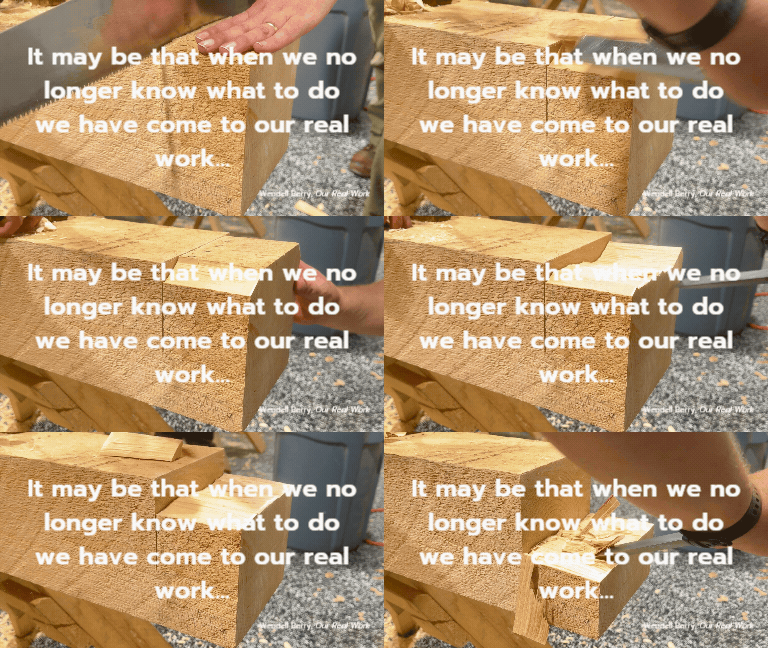
I think many people take on elemental work like this — work that contrasts in almost every possible way with their everyday jobs — as a way of realigning and recalibrating their worklife. And my experiences suggests, two weeks in, that…well, it more or less works. But while the craftsman inside of me has been busy carving up timber, the philosopher has also been at work, trying to build a theory about how and why it works, to construct a portable edifice of thought (a mobile-home-of-thought, if you will); something beyond the nascent skills and fully developed stiffness to take home with me.
Here’s a partial sketch, the first draft of...
…A Blueprint
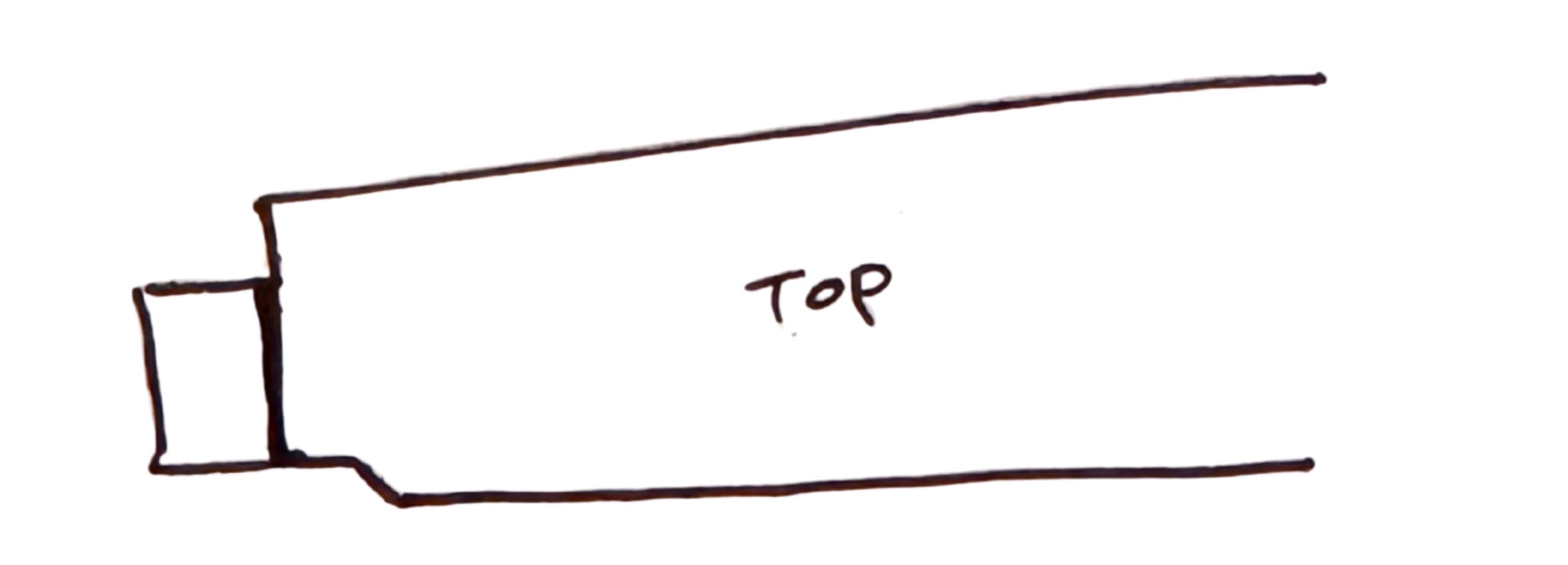
Manual work (craft, physical labor, the trades) cannot be faked, nor can one reap the benefits of such labor unless they acquire and exercise the relevant skills.
We’re so used to “faking it,” even while we’re “making it,” that we long for work that can show us how to be accountable to ourselves. We so often feel like imposters in our jobs that we’ve invented a syndrome to capture the feeling into pathology, so we can release it through meditation, positive self-talk, and therapy (all good practices, by the way, and each of which I recommend in their appropriate place). David Graeber talks about bullsh*t jobs, about work we do that’s so pointless that the real job becomes hiding this fact from ourselves and our superiors. I think he’s right that such work, however much of it we find ourselves doing, degrades and deforms our souls.
That’s partly why craftwork feels like “real work,” and, by contrast, illuminates the aspects of our jobs that feel like busywork, make-work, work that’s a copy of a copy of the original. “Did I do this right?” Isn’t a question I have to carry with me after hours, ruminating on it in the moments before I drift off to sleep. There’s a straightedge that will tell me. There’s a “square rule” that I’ve followed or I haven’t. And if I somehow hide the truth from myself, fudging a sixteenth of an inch here or two degrees of an angle there, the master in the workshop will reveal it in a check without a word. “Getting away with it” in the moment just means the beams, sill, and posts won’t fit together on raising day (a far more public stage on which to fail).
It’s not that this allows me to achieve perfection in each instance, craftwork also reveals this possibility to be a fantasy, but it provides a measure of the fruits of my labor, a snapshot of my current skill set, and — when assembled regularly — a timelapse, a moving picture, representing growth, progress, and development.
Matthew Crawford captures this beautifully in his contemporary classic, Shop Class as Soul Craft:
The satisfactions of manifesting oneself concretely in the world through manual competence have been known to make a man quiet and easy. They seem to relieve him of the felt need to offer chattering interpretations of himself to vindicate his worth. He can simply point: the building stands, the car now runs, the lights are on. Boasting is what a boy does, because he has no real effect in the world. But the tradesman must reckon with the infallible judgment of reality, where one’s failures or shortcomings cannot be interpreted away. (Page 15)
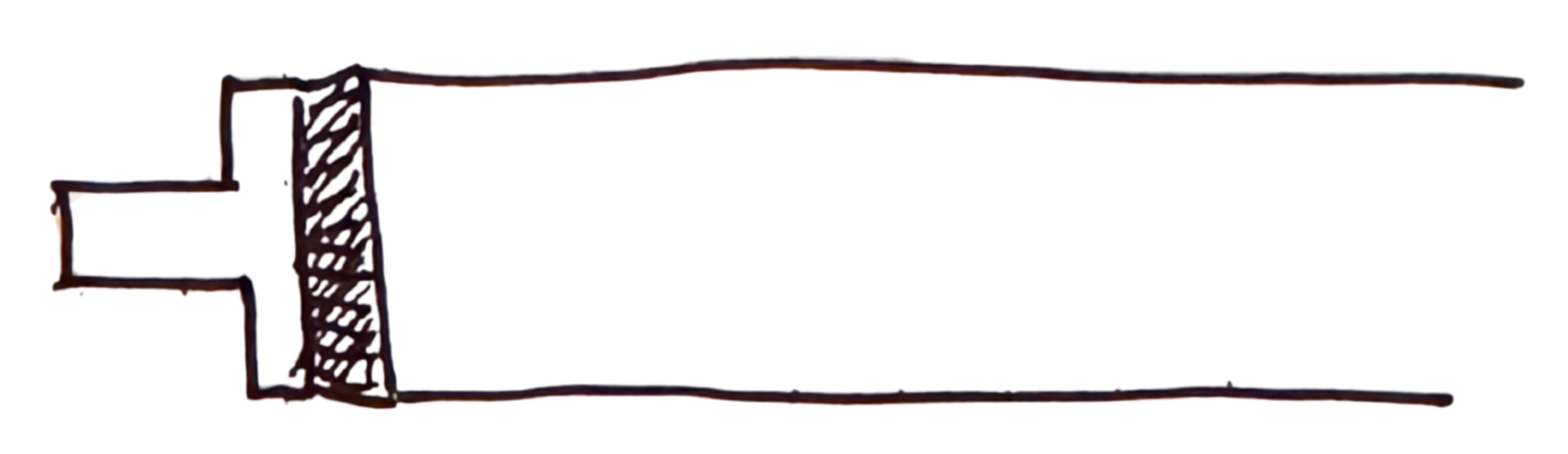
Such work manifests the good at which it aims directly. The distance between effort and end is reduced greatly. The purpose of one’s work is necessarily ready-to-hand.
We throw around a lot of words in theorizing about work. (And by “we” I mean “philosophers,” and by “philosophers” I mean “me.”) But the reason is because the richness of the subject demands it. For instance, I strongly believe in drawing a distinction between the purpose for which one works, and the meaning of the work. (Meaning-fulness is yet another concept, and I’m going to sidestep that for the moment.) One may have any number of purposes in working — to feed a family, to increase scientific knowledge, to use one’s mind in a satisfying and enjoyable way, etc. — but the purpose of one’s work (the primary purpose, you could say) is largely dictated by the nature of the work itself. A car salesman’s purpose in chatting about interior features is to sell the car. A banker’s purpose in evaluating an investment is to see whether the potential returns are worth the risks in making it.
Much of work today is so abstract and fragmented that it’s not even clear what the purpose of one’s individual job really is. Even when it’s supposedly clear — “My role is to manage a dynamic team of engineers and designers to make sure products are market ready by launch using a cascading KPI model of productivity management” (or whatever) — it’s not always guaranteed that this is your actual purpose. Especially within large and complex organizations, one can often legitimately ask whether they’re really performing some essential task related to the company’s mission, or whether they’re really there to take the fall for middle management, to boost the ego of someone a little further up in the hierarchy, or to serve to answer or preempt a PR question about the company’s values.
Professors, for instance, are purportedly employed to teach undergraduate students, mentor graduate apprentices, and add to the repository of knowledge through disciplinary methods. But, as I’ve argued in a recent article in Notre Dame Magazine, the line between actually teaching and merely performing that role is fine, fragile, and increasingly less clear.
But what about craftwork? The product is a thing with an unambiguous function; a house provides shelter from the elements, a pair of leather boots protects our feet from the elements. And the reason to produce these — the purpose — is inherent in that function. So much so that we actually call these things “goods.” I’m not saying all such products are good, full stop (we could imagine an artisanal napalm factory, for instance, or a blacksmith that specialized in implements of torture), but there’s never a question, for work of this type, about whether it’s serving any purpose, or about what that purpose ultimately amounts to in the real world.

Craftwork allows one to inhabit the world on a human scale, and to participate in its creation. It is the process of cultivating “at-homeness” by contributing to a built environment within which communities are formed and against which human lives are lived.
Because this type of work wears its purpose on its sleeve, so to speak, it also lends itself far more easily to descriptions of life in which its products have real (sometimes simple, often essential) meaning. If you build a table, you’re creating an essential place of communion, deliberation, and festivity. It doesn’t stretch the imagination to see a future owner — likely someone in close enough proximity to yourself that you probably know them — using and enjoying the piece.
I often think about this when students say they want to “help people” or “make the world a better place.” This is often the socially acceptable wrapper for professional ambition that’s steering them toward a high-status, highly compensated industry like consulting or investment banking…and I think they almost always mean it. What I sometimes want to tell them, though, is:
“Can you imagine a more direct and satisfying way of doing this than to keep your neighbors warm while putting food on the table for your own family? What could be more helpful or good than crafting a structure for generations of families who will cherish, share, and pass on it as an inheritance? If help and betterment are the main motivation driving you in work, find something useful and inauspicious. Settle down in a community you can afford, and afford to build up. Engage in the real politics of city council meetings, neighborhood block parties, and nonprofit service. Have seven kids before you’re thirty-five. Help those tiny little people. For those to whom you’re the whole world, it’s pretty easy to make that world a better place.”
[End of speech.]
Needless to say, this is a noble purpose. It’s value obviously transcends monetary gain. It’s work, and work that is real.
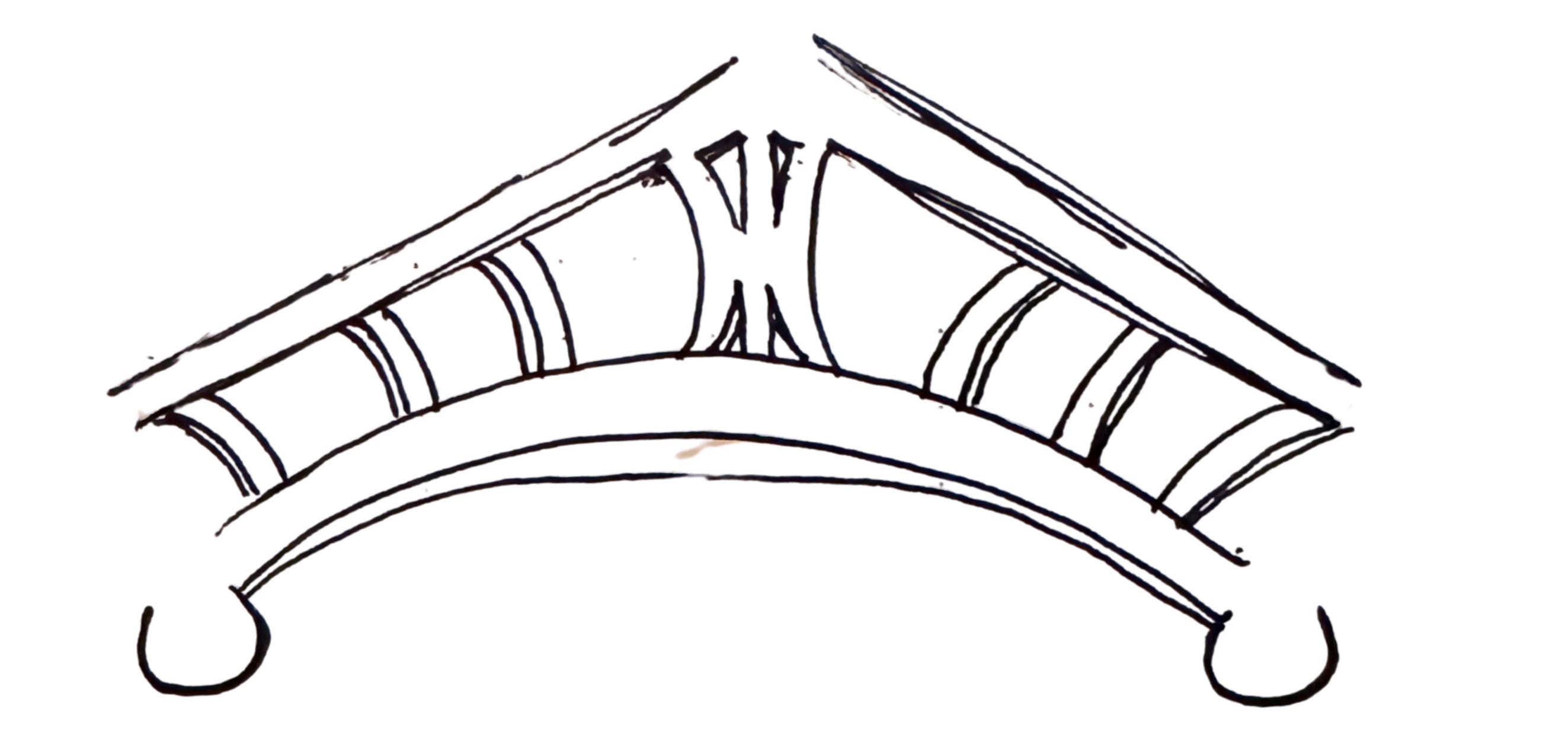
The Tools I’ll Bring Home With Me
Of course, the beauty and the tragedy of an experiment like mine is that it doesn’t last forever. At the end of the week, I will drive straight across the state of Ohio (without stopping if I can possibly help it) to my actual home in South Bend. While my future is a bit more nebulous [[I. can’t. wait. to. say. more.]] many of my classmates will be returning to the jobs they left behind. Their world will have remained largely unchanged in their absence. Like Henry David Thoreau leaving Walden Pond, we’ll reenter lives our experiments aimed to transcend. So what will we have gained?
First (and this doubles as my advice to any of you out there considering such an experiment), we will (hopefully) leave with a finer-grained vision of what aspects of our worklives are already balanced. When frustration is solidifying into burnout, it can feel like the problem with our work is that it’s just everything, all the time, all at once. But going on a journey has a way of making you see the ordinary (the mundane, the everyday) anew.

Secondly, and equally importantly, I’ll spend time revisiting the moments of greatest satisfaction. I may even journal about it because I am a sensitive artist. What felt like pure relief while I was in the workshop? Like reuniting with an old friend? Like finally letting some aspect of my personality out into the light of day again? By tuning into these experiences, I can further discern the path forward. How can I make my work — whatever that is — more real? Or, in some cases — like mine — how can I go out into the world again and find some work that is?
Finally, and lastly (one might say: ultimately), I’m going to bring some literal tools home. A chisel and a framing square and an insane confidence in my ability to recall and apply the knowledge and know-how I’ve been building these past few weeks. The kind of foolhardy attitude that will allow me to accomplish my first minor failure — all on my own, in the privacy of my garage — and begin the cycle of humiliation, submission, and triumph that can eventually make master craftsmen of us all.
Footnote: (*) you’re bored and understimulated; you’re stressed and overstimulated; you don’t think you’re living up to your potential; you have a sneaking suspicion that your efforts are meaningless, or worse…
This was excellent!